The Hormuz Blockade Is a Semiconductor Time Bomb and Nobody's Watching the Clock
Trump just ordered a naval blockade of the Strait of Hormuz. Markets are focused on oil. But what if they're looking at the wrong thing?
Yes, crude spiked.
Yes, the energy trade is loud right now.
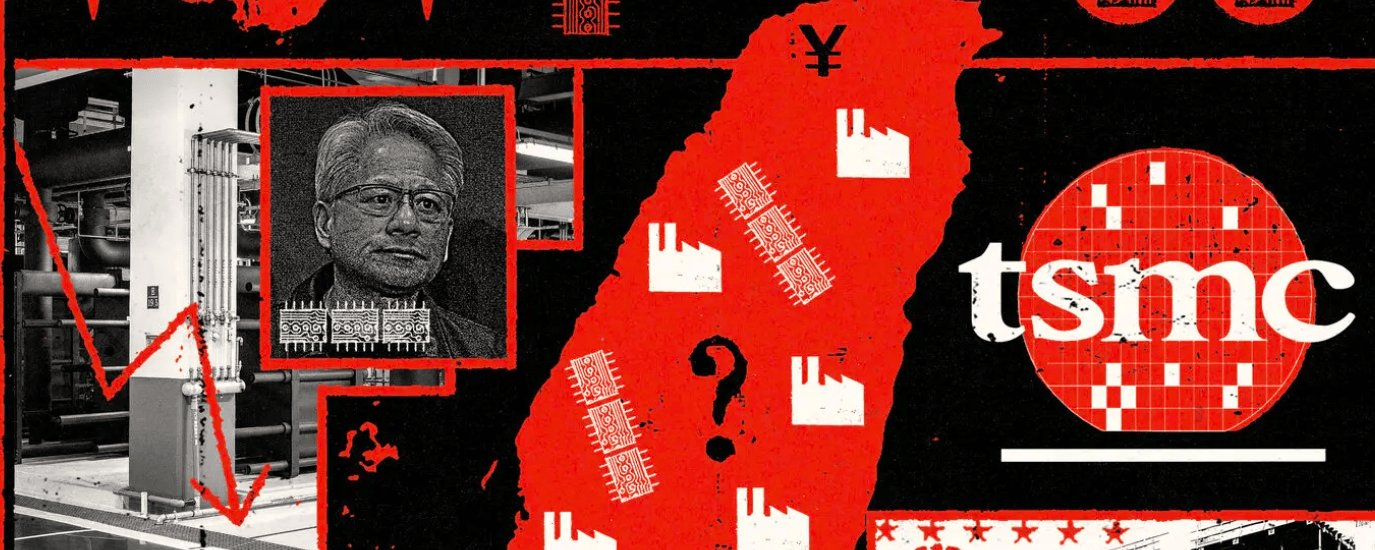
But the real story, the one that could actually detonate the entire US stock market is playing out in silence, about 4,000 miles east of the Strait, in a small island that produces the chips your phone, your data center, and your $NVDA position all depend on. Yes, you are correct, TAIWAN.
China Doesn't Import Oil for Fun
Roughly 40% of China's oil flows through the Strait of Hormuz. Every tanker that now sits frozen in that blockade is a direct economic punch to Beijing. And unlike the US, China can't just shrug and call a Saudi friend, they're locked in, exposed, and watching an American president cut off their energy lifeline in real time.
They already vetoed the UN resolution. They've been arming Iran. They're not a neutral party watching this from the sidelines. They're in it. And when you corner a major power with nuclear weapons and $18 trillion in economic firepower, they don't absorb the hit quietly. They find the lever that hurts you back the most.
For China, that lever is Taiwan.
CHINA Already De-Risked. AMERICA Didn't.
In September 2025, Beijing banned its major tech companies from purchasing Nvidia chips altogether. Huawei's Ascend 910C is now outperforming the H20 on AI inference workloads. China's domestic chip supply is on track to exceed its own demand for the next five years running. They didn't stumble into self-sufficiency but they engineered it deliberately, quietly, while everyone was distracted by trade war headlines.
China can embargo Taiwan and take the pain. The US cannot say the same.
TSMC manufactures over 90% of the world's leading-edge semiconductors. That alone should keep every risk manager up at night. But the deeper vulnerability is CoWoS (Nvidia's advanced packaging process that physically makes Blackwell chips function at the performance level they're valued for).
CoWoS is almost entirely done in Taiwan. Not partially. Not mostly. Almost entirely.TSMC's Arizona facility doesn't solve this. It wasn't built for CoWoS at that scale, and even the most optimistic projections don't see a real alternative before 2027 at the earliest. If Taiwan goes dark, even for 30 days, Nvidia's supply chain doesn't slow down. It stops.
$NVDA Is the Whole Market Now.Nvidia isn't just a semiconductor company anymore. It's the load-bearing wall of the US equity market. When NVDA sells off hard, it doesn't drop in isolation, It reprices AI infrastructure, pulls down the mega-cap tech basket, hits ETF flows, and triggers systematic deleveraging across the entire market.
A Taiwan invasion, triggered as China's asymmetric response to Hormuz, would be the fastest path to a full market crash that anyone has mapped out. It wouldn't require a war. It wouldn't even require a shot fired. Just a credible naval presence around the Taiwan Strait and a statement from Beijing, and NVDA falls 30% before the opening bell clears.
The Market Is Pricing Zero.
That's the insane part. With a US-Iran war actively underway, China already embedded in the conflict as an arms supplier, their energy supply being choked off, and Taiwan sitting on 90% of global advanced chip production, the options market is pricing essentially zero probability on a Taiwan scenario. It's not even a tail risk anymore. It's a policy option sitting openly on Beijing's table, and they now have every economic incentive to use it.
Trump weaponised energy. China's counter-weapon is semiconductors. The market hasn't figured that out yet.
When it does, it won't be gradual.